Digital Marketing vs Social Media Marketing: A Comprehensive Comparison
Digital Marketing vs Social Media Marketing: A Comprehensive Comparison
In the dynamic world of online marketing, two key strategies stand out: digital marketing and social media marketing. Both are powerful tools that businesses use to reach their target audience, but they differ in their approach and goals. Understanding these differences can help businesses make informed decisions about their marketing strategies.
1. Introduction
Digital marketing and social media marketing are essential components of a comprehensive marketing strategy. While they share similarities, such as reaching and engaging audiences, they differ in execution and focus. Understanding these differences is key to maximizing marketing effectiveness.
2. What is Digital Marketing?
Digital marketing includes all marketing efforts that use electronic devices or the internet. This covers online advertising, email marketing, social media, and more. The goal is to reach and engage potential customers through multiple digital channels.
3. Components of Digital Marketing
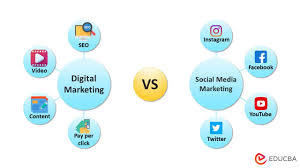
- ◾Search Engine Optimization (SEO): Optimizing websites to rank higher on search engines and increase organic traffic.
- ◾Content Marketing: Creating and distributing valuable content such as blogs, videos, and infographics to attract audiences.
- ◾Email Marketing: Sending targeted messages to nurture leads and build customer relationships.
4. What is Social Media Marketing?
Social media marketing involves using social platforms to connect with audiences, build brand awareness, increase sales, and drive website traffic. It includes creating and sharing content on platforms such as Facebook, Instagram, and Twitter.
5. Key Differences Between Digital Marketing and Social Media Marketing
While both aim to engage audiences, their approaches differ:
- ◾Reach: Digital marketing uses multiple channels, while social media marketing is limited to social platforms.
- ◾Engagement: Social media focuses on interaction, while digital marketing can be more conversion-focused.
- ◾Targeting: Social media offers detailed targeting, while digital marketing may use broader methods.
- ◾Content: Social media relies heavily on visual storytelling, while digital marketing includes diverse formats.
6. Benefits of Digital Marketing
- ◾ Broader Reach: Connect with a large audience across multiple platforms.
- ◾ Targeted Advertising: Deliver messages to specific audience segments.
- ◾ Measurable Results: Track campaign performance using analytics.
- ◾ Cost-Effective: Often more affordable than traditional marketing.
7. Benefits of Social Media Marketing
- ◾ Increased Brand Awareness: Reach wider audiences and strengthen brand presence.
- ◾ Engagement: Interact with customers in real time.
- ◾ Customer Insights: Gain valuable data on audience behavior.
- ◾ Drive Website Traffic: Increase visits and conversions.
8. How to Choose Between Digital Marketing and Social Media Marketing
The choice depends on your goals, audience, and budget:
- ◾ Digital Marketing: Best for broader reach and structured campaigns.
- ◾ Social Media Marketing: Ideal for engagement, branding, and community building.
9. Case Studies: Successful Implementations
Case Study 1: Company A
Company A implemented a digital marketing strategy including SEO, content marketing, and email marketing, resulting in a 50% increase in website traffic and a 30% rise in sales within six months.
Case Study 2: Company B
Company B focused on social media marketing, creating engaging content and interacting with users, leading to a 70% increase in brand awareness and a 40% boost in customer engagement.
10. Conclusion
Both digital marketing and social media marketing are essential for modern businesses. While they differ in approach, they work best when combined to effectively reach and engage target audiences.
Check us out on LinkedIn.