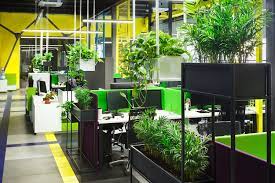
Greenery in office (promoting healthy surroundings )
1. Improved Air Quality
Indoor air quality plays an important role in workplace wellness. Plants act as natural air purifiers by absorbing pollutants and releasing oxygen. This helps improve air quality and provides employees with a fresher and more refreshing work environment.
2. Stress Reduction and Well Being
Greenery in the workplace has a positive effect on reducing stress and improving well being. Natural elements such as plants create a connection with nature that helps employees feel calmer, improves mood and contributes to a peaceful working atmosphere.
3. Productivity Enhancement
Plants in the workplace are often associated with improved productivity. The presence of greenery stimulates cognitive activity, encouraging better concentration, creativity and problem solving abilities among employees.
4. Noise Reduction and Acoustic Comfort
Plants help reduce background noise in open office environments. Their natural structure absorbs sound, creating a quieter and more comfortable atmosphere that allows employees to work with better focus.
5. Visual Appeal and Aesthetics
Greenery improves the visual appearance of the workplace. Plants soften the office environment and introduce natural beauty into the workspace, making the environment more welcoming and pleasant for employees and visitors.
6. Creativity and Innovation
Natural elements encourage creative thinking. A workspace that includes greenery creates a positive environment that motivates employees to think creatively and approach tasks with new ideas and perspectives.
7. Connection with Nature
In modern urban workplaces, employees may have limited access to nature. Indoor plants help recreate that connection, supporting emotional balance and contributing to overall employee well being.
Considerations for Incorporating Greenery
1. Suitable Plant Selection
Selecting plants that grow well indoors and require minimal maintenance is important. Factors such as lighting conditions, room temperature and indoor climate should be considered to ensure that plants remain healthy and long lasting.
2. Lighting Requirements
Different plants require different levels of light. Understanding the available natural light within the workspace helps determine where plants should be placed so they can grow properly.
3. Maintenance and Care
Proper plant care is essential for maintaining healthy greenery. Regular watering, occasional pruning and suitable fertilization help plants remain fresh and vibrant. Encouraging employees to assist with plant care can also create a sense of shared responsibility.
4. Allergies and Sensitivities
Some people may have allergies or sensitivities to certain plants. Choosing plant varieties that are less likely to cause allergic reactions ensures that the workspace remains comfortable for everyone.
5. Space Planning
Careful placement of plants ensures they provide benefits without disrupting work areas. Plants can be positioned near workstations, shared areas or unused corners to enhance the visual environment while maintaining clear pathways.
6. Wellness Programs
Including greenery as part of workplace wellness programs supports employee well being. Activities related to plant care or workplace gardening can strengthen community engagement and create a healthier work environment.
7. Educational Initiatives
Educating employees about the benefits of indoor plants and their air purifying properties increases awareness and appreciation. Informational sessions, workshops or internal guides can support this initiative.
8. Flexible Design Elements
Using movable plant containers allows organizations to adjust plant placement whenever office layouts change. Flexible designs support evolving workspace arrangements and interior design improvements.
Check us out on LinkedIn.